First impressions matter, particularly when somebody is visiting your workplace for the first time.
Nobody wants to arrive for an important meeting only to find themselves standing awkwardly at reception, filling out paperwork, waiting for somebody to acknowledge them or wondering whether anyone actually knows they’re there.
Yet for many organisations, visitor check-in remains a surprisingly manual process. And whilst workplaces have spent years modernising how employees book desks, reserve meeting rooms and access facilities, the experience of actually arriving at the building hasn’t always kept pace.
So, what does a modern visitor check-in system actually look like?
What Is Digital Visitor Check-in?
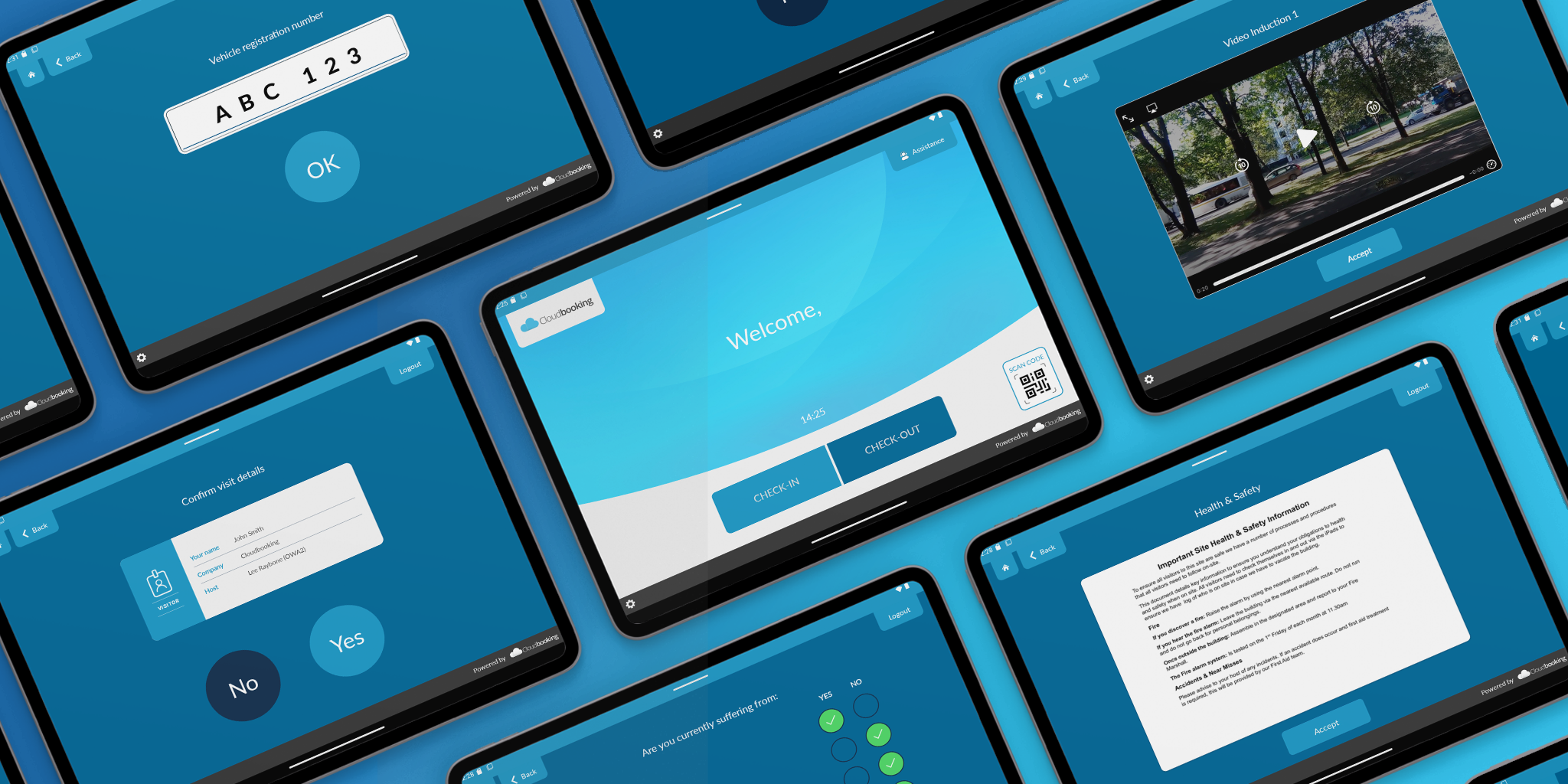
Digital visitor check-in is the process of digitally registering, welcoming and managing visitors as they arrive at a workplace. Typically delivered through a self-service tablet or visitor management system, it replaces traditional paper sign-in books and manual reception processes with a faster, more organised experience.
Rather than asking guests to write their details in a book and wait for somebody to track down their host, digital check-in allows visitors to confirm their arrival, complete any necessary documentation and notify the relevant employee through a straightforward, guided process.
How Does a Digital Visitor Check-in System Work?
The process can begin before somebody even reaches reception. Visitors can be pre-registered, allowing organisations to collect relevant information in advance and prepare for their arrival.
Once on site, guests can use a self-service check-in application to confirm their details and complete any required steps.
Depending on the organisation, this might include:
- Self-service registration: Allow visitors to check in independently through a simple, intuitive interface.
- Visitor questionnaires: Collect relevant information as part of the arrival process.
- Digital agreements and signatures: Present documents, policies or declarations for visitors to review and acknowledge.
- Visitor inductions: Share welcome information, safety instructions or mandatory site briefings as part of the arrival process.
- Host notifications: Automatically inform employees when their expected visitor has arrived.
- Visitor badges: Print identification badges where required to support on-site visitor identification.
The idea is straightforward: give visitors the information they need, collect what’s necessary and make sure the right people know they’ve arrived. All without turning a five-minute arrival into a fifteen-minute administrative exercise.
Related Reading: What is a Visitor Management System?
Why Does Digital Visitor Check-in Matter?
First Impressions Start at Reception
Your reception area is often the first physical interaction somebody has with your organisation. Whether they’re a prospective client, new employee or visiting contractor, the experience they have upon arrival can influence their perception of the workplace.
A lengthy, confusing check-in process isn’t exactly the warmest welcome. Digital visitor check-in makes that first interaction considerably simpler, with clear instructions, intuitive self-service technology and a consistent arrival process helping visitors feel expected and prepared, rather than left wondering what they’re supposed to do next.
And for reception teams, reducing repetitive administration means more time to actually welcome people and assist those who need additional support.
Better Visibility of Who Is on Site
Knowing who has entered your workplace is important for both day-to-day operations and emergency planning.
Traditional paper sign-in books can make it difficult to maintain an accurate picture of who is currently on site, particularly when visitors forget to sign out or records need to be checked quickly. Digital visitor management can help organisations maintain more accessible arrival and departure records, supporting reception teams and those responsible for workplace safety.
This is particularly relevant to emergency preparedness. UK Government guidance on workplace fire safety requires responsible persons to assess risks, identify people who may be affected and prepare appropriate emergency arrangements.
A reliable visitor record can support those arrangements by helping organisations account for guests, although it doesn’t replace a proper evacuation plan.
Making Visitor Inductions Easier
Nobody particularly enjoys arriving at a workplace only to be handed a stack of paperwork before they can get on with their visit.
Health and safety instructions, site policies and mandatory inductions all have their place, but communicating them shouldn’t make the arrival process unnecessarily complicated.
Digital visitor check-in systems can make this considerably easier. Digital agreements, questionnaires and video inductions allow organisations to build these requirements directly into the check-in process, giving visitors a straightforward way to review important information and complete any necessary steps.
Fundamentally, this helps ensure important information is communicated consistently and any required acknowledgements are recorded, without adding unnecessary delays to the visitor’s arrival.
Less Administration, More Consistency
Managing visitor check-in across multiple workplaces introduces another layer of complexity.
Different sites may have different reception processes, visitor requirements or approaches to collecting information, creating unnecessary administration for employees and inconsistent experiences for guests.
A configurable digital check-in process allows organisations to standardise how visitors are welcomed whilst accommodating individual site requirements. Reception teams can spend less time managing paperwork and repetitive tasks, whilst workplace managers have greater visibility over how visitor arrivals are handled across their locations.
It also provides a more structured approach to collecting personal information. The Information Commissioner’s Office advises organisations to collect only the personal data they actually need and take appropriate steps to protect it.
A digital system doesn’t automatically make an organisation compliant with data protection legislation, but a properly configured visitor management process can make it easier to control what information is collected and how it is handled.
What Should You Look for in a Visitor Check-in System?
The most important consideration is whether the system makes arrival easier for visitors whilst meeting the operational requirements of the workplace. After all, a complicated interface defeats the purpose of self-service check-in, regardless of how many features sit behind it.
A good modern visitor check-in system should be intuitive enough for guests to navigate without assistance, flexible enough to accommodate different visitor types and configurable to suit the requirements of individual workplaces.
It should also connect with wider visitor management processes, allowing organisations to manage everything from pre-registration and host notifications to visitor records and emergency procedures without unnecessarily complicating the arrival experience.
And perhaps most importantly, it should be reliable. Nobody wants to arrive at reception and discover the technology that’s supposed to make everything easier has decided to take the morning off.
Rather conveniently, Cloudbooking’s CB Check-in App brings together intuitive self-service check-in, configurable visitor journeys and video inductions. So, if you are looking to modernise your visitor experience, take a look at what we’ve been working on. It might just be the solution for you…
Final Thoughts
Visitor check-in might seem like a relatively small part of the workplace experience, but it has an important role to play in how organisations welcome and manage their guests. From simplifying arrivals and reducing administration to delivering inductions and maintaining visitor records, the right technology can make the entire process considerably easier for everyone involved.
And ultimately, a good visitor experience shouldn’t require much effort from the visitor. When everything works as it should, guests can simply arrive, feel welcome and get on with the reason they’re there in the first place, and that’s what sets the right first impression.
Want to improve your visitor experience? Get in touch today and discover how Cloudbooking can help you deliver a hassle-free visitor check-in experience.