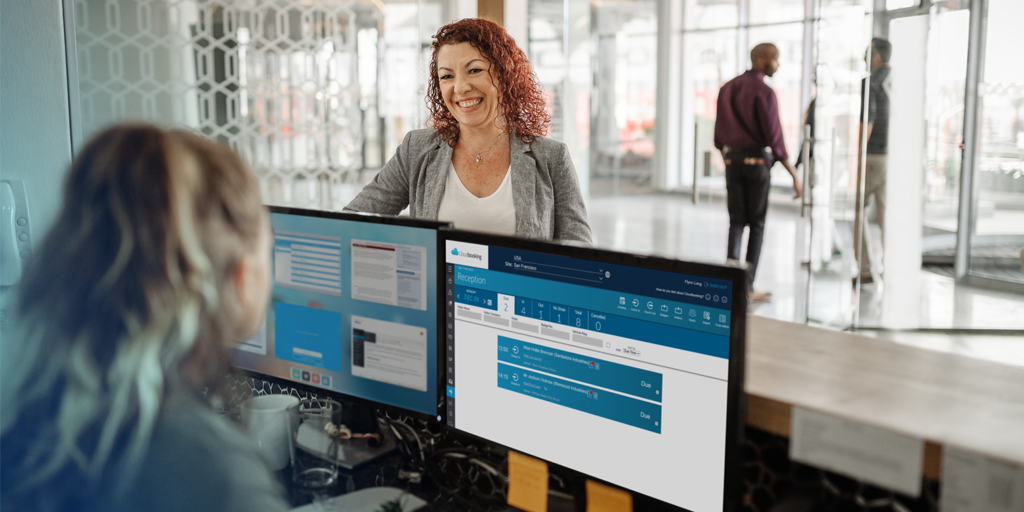
A Visitor Management System (VMS) is a platform that allows organisations to manage, track and monitor visitors entering and leaving their workplace.
In practice, a Visitor Management System exists to replace paper sign-in books, manual reception processes and the uncertainty that comes with not knowing who is in your building at any given time.
Whether its clients attending meetings, contractors carrying out maintenance, interview candidates arriving for appointments or external suppliers making deliveries, organisations need a structured way to manage visitor access. A Visitor Management System provides that structure.
Why Does Visitor Management Matter?
Every organisation welcomes visitors in some form, but managing those visitors manually creates challenges and security risks.
Traditional sign-in books provide limited visibility, can be difficult to audit and often create unnecessary administrative work for reception teams. They also offer little support when it comes to compliance, security or emergency procedures.
At the same time, visitor expectations have changed. People increasingly expect a smooth, professional arrival experience rather than waiting in reception to complete paperwork and locate their host.
Visitor management exists to address both operational and security requirements while improving the overall visitor experience.
How Does a Visitor Management System Work?
In its most common form, visitor management is typically a digital check-in process.
Before arriving, a visitor can be pre-registered by their host and provided with information about their visit. Upon arrival, they check in using a kiosk, tablet, QR code or reception desk. The system records their attendance, notifies their host and maintains a live record of who is currently on-site.
Many organisations also use visitor management systems to capture additional information such as:
- Health and safety declarations
- Confidentiality agreements
- Site policies
- Security screening information
- Visitor photographs
- Vehicle registration details
When the visit ends, the visitor checks out, ensuring records remain accurate and up to date. The result is a complete digital audit trail of visitor activity.
Related Reading: What is Desk Booking?
What Is the Difference Between Visitor Management and a Sign-In Book?
Whilst a sign-in book records that somebody has entered a building, a Visitor Management System manages the entire visitor journey.
For instance, a paper log might capture a name and arrival time, modern visitor management systems typically provide:
- Pre-registration
- Host notifications
- Digital records
- Compliance declarations
- Visitor badges
- Emergency evacuation reporting
- Security screening
- Visitor analytics
The distinction becomes important when organisations need visibility, compliance support or security controls that extend beyond basic visitor registration.
What Problems Does a Visitor Management System Solve?
The most obvious problem is visibility.
Without a structured system, organisations often struggle to maintain an accurate picture of who is currently on-site. Visitor records become fragmented across reception logs, spreadsheets or manual processes.
A Visitor Management System centralises this information and makes it available in real time.
It also helps address several other common challenges:
- Security teams gain greater control over visitor access and approvals.
- Reception teams spend less time handling manual administration.
- Facilities and workplace teams can access accurate visitor data when planning building operations.
- Health and safety teams benefit from up-to-date occupancy information during evacuations or emergencies, as well as having another avenue to process declarations.
How Does Visitor Management Improve Security?
Security is one of the primary reasons organisations invest in visitor management software.
Knowing who is in your building, why they are there and who they are meeting provides a significantly higher level of control than traditional paper-based processes.
Many visitor management systems support:
- Visitor watchlists
- Approval workflows
- Identity verification
- Visitor photographs
- Access restrictions
- Contractor management
These controls help organisations reduce risk while maintaining a professional visitor experience. Importantly, they also create an auditable record that can be reviewed if required.
Related Reading: What is Room Booking?
How Does Visitor Management Support Compliance?
Many organisations operate within environments where compliance and governance are important considerations.
This may include health and safety declarations, visitor agreements, contractor management requirements or internal security policies.
A Visitor Management System helps organisations demonstrate that visitor processes are being followed consistently.
Rather than relying on paper records that can be misplaced or incomplete, digital systems provide a clear audit trail showing:
- Visitor details
- Arrival and departure times
- Completed declarations
- Approval history
- Host information
This improves accountability and simplifies reporting.
What Features Should a Visitor Management System Include?
If you’re evaluating visitor management software, there are several capabilities worth looking for:
- Visitor pre-registration
- Self-service check-in
- QR code check-in
- Host notifications
- Visitor badges
- Compliance declarations
- Approval workflows
- Emergency evacuation reporting
- Visitor analytics
- Integration with existing workplace systems
Without reporting and visibility, visitor management remains largely operational. When reporting and analytics are included, it becomes a strategic tool that helps organisations understand visitor trends, improve workplace operations and strengthen security processes.
Final Thoughts
A Visitor Management System is far more than a digital sign-in book. It provides organisations with visibility of who is on-site, strengthens security, supports compliance and improves the visitor experience from arrival through to departure.
As workplaces continue to become more flexible, connected and data-driven, visitor management is increasingly becoming an important part of wider workplace operations. Ultimately, visitor management is about creating a safer, more efficient and more professional workplace whilst ensuring organisations have the information they need to manage visitors with confidence.
Unsure how to get started with visitor management? Take a look at our case studies or get in touch today. We know a thing or two about helping build adaptive workspaces after all.