Hybrid working has changed how employees use the office. People aren’t necessarily arriving at the same time, sitting at the same desk or following the same routine five days a week. And whilst that flexibility has its benefits, it also means workplace requirements can change considerably from one day to the next.
You might need a desk for tomorrow, a meeting room for this afternoon or somewhere to park before heading into the office and let’s be honest, having to sit down at a computer every time you want to organise your working day isn’t exactly convenient.
This is where mobile workplace management comes in. Giving employees access to workplace services through their phones makes it easier to find, book and manage the spaces they need, wherever they happen to be.
So, why should mobile access be part of your workplace management strategy?
What Is Mobile Workplace Management?
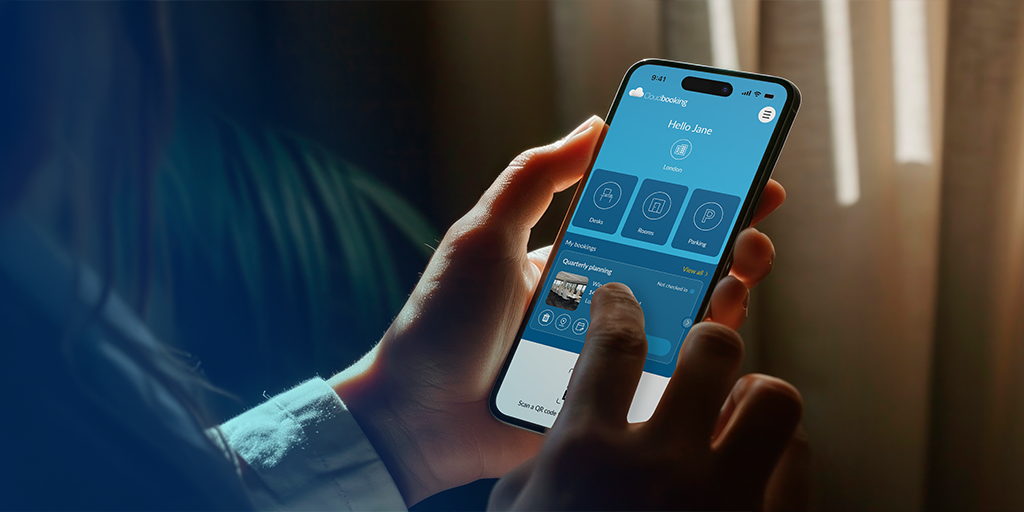
Mobile workplace management is the ability to access and manage workplace resources through a smartphone or mobile application. Rather than relying entirely on desktop software, employees can use their phones to check availability, reserve spaces, manage existing bookings and complete workplace check-ins.
For organisations operating hybrid or flexible working arrangements, this means employees can organise their workplace needs before arriving at the office and make adjustments throughout the day.
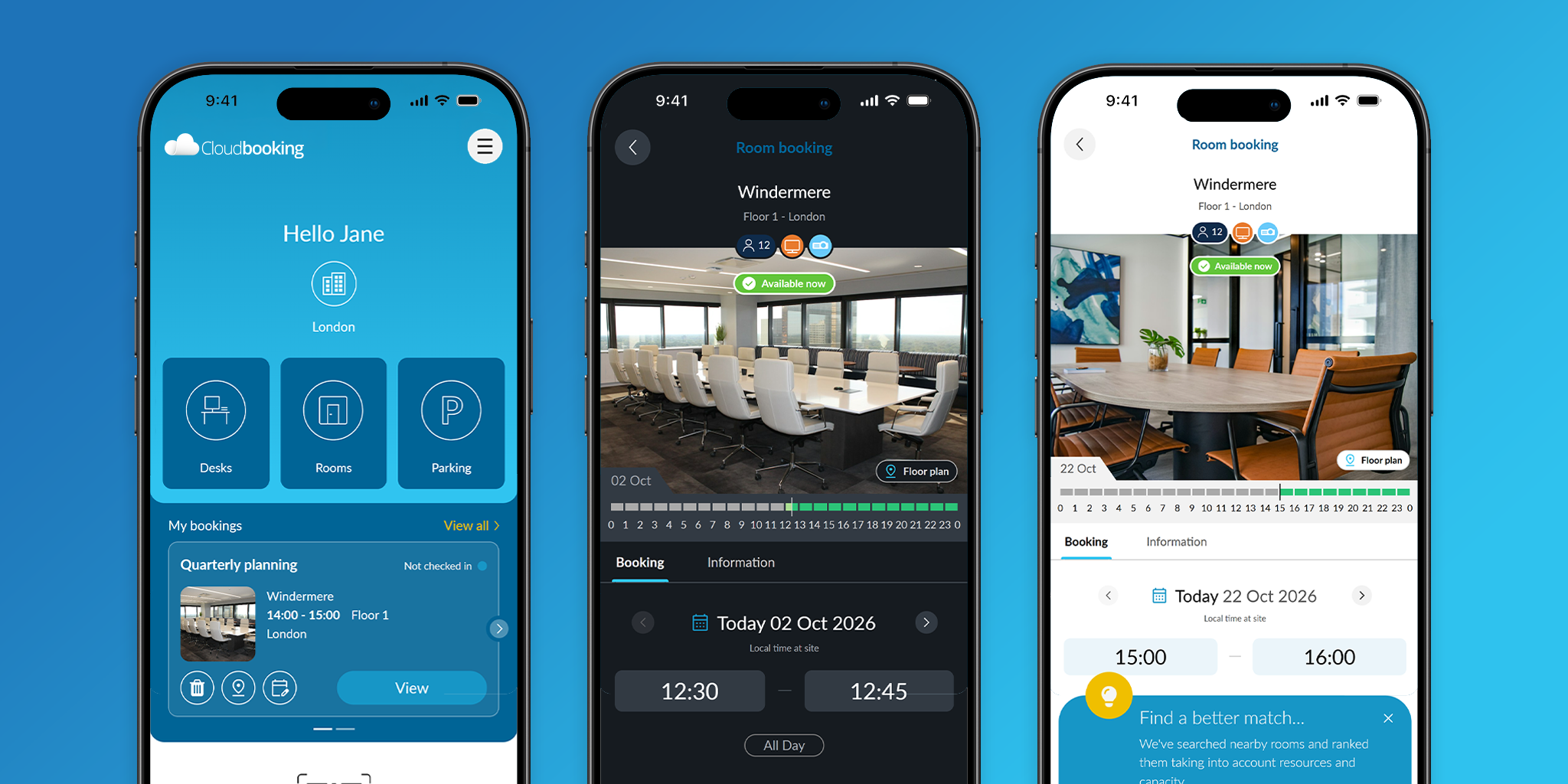
A mobile workplace management app can bring services such as desk booking, meeting room booking and car park management together in one place, providing employees with a more convenient way to plan and manage their time in the workplace.
And importantly, it means workplace management can fit around the working day, rather than the other way around.
Why Is Mobile Access Important for Hybrid Working?
Hybrid working has made workplace attendance considerably less predictable. Employees may work from home one day, attend the office for meetings the next and change their plans depending on colleagues, projects or other commitments.
For employees, that flexibility is a big part of the appeal. But it works considerably better when they have the tools to organise their working day around their needs. Whether that’s planning an office visit in advance, finding somewhere to work alongside colleagues or making last-minute changes, mobile apps make it easier to manage workplace arrangements without being tied to a desktop.
For the people managing those workplaces, however, hybrid work presents a different challenge. How do you make sure there’s enough space for everyone on busy days, whilst avoiding unnecessary costs from underused office space?
The answer, at least in part, comes down to having accurate workplace data. Facilities and estate management teams need to understand how their spaces are being used to make informed decisions about capacity, resources and future workplace requirements.
But there’s a catch. Workplace management systems are only as useful as the information going into them. If employees aren’t consistently booking spaces or checking in when they arrive, organisations can end up with an incomplete picture of workplace demand and utilisation.
And this is where mobile apps can make a real difference. By making workplace booking and check-in more convenient, organisations can encourage greater adoption of their workplace management systems, whilst giving employees the flexibility to manage their working day wherever they are.
For employees, that means a more convenient workplace experience. For estate teams, it means better visibility of how their spaces are being used and more reliable information to support future decisions. So yes, mobile apps are a solution that makes everyone happy…
And ultimately, that’s what effective hybrid working should achieve: a workplace that works better for both the people using it and the teams responsible for managing it.
Related Reading: What is Desk Booking?
What Are the Benefits of Mobile Workplace Management?
Making Workplace Booking More Convenient
Nobody particularly wants to spend their morning searching for an available desk or trying to work out whether a meeting room is free.
Mobile workplace management gives employees a straightforward way to check availability and make reservations, whether they’re planning ahead or already in the building.
Being able to manage desks, meeting rooms and parking through one application also removes the need to navigate separate systems for different workplace services.
And when bookings can be viewed, changed or cancelled directly from a phone, employees have more control over their working day without adding unnecessary administration.
Smarter Workplace Check-in
Booking a desk or meeting room is one thing, actually turning up and using it is another. For organisations trying to understand how their workplaces are being used, that distinction matters. A desk might appear unavailable because somebody booked it three days ago, even if that person never actually arrived.
Mobile check-in can help address this by making it easier for employees to confirm their arrival and the use of a reserved space.
QR codes provide a straightforward way to check in directly from a mobile device, helping employees confirm their arrival without needing to return to a desktop or rely on manual processes.
For workplace teams, these check-ins also provide a useful indication of whether reserved spaces are actually being used, helping identify no-shows and improve the accuracy of workplace usage information.
Making Better Use of Workplace Space
For workplace teams, mobile access isn’t only about convenience, it can also support more effective space utilisation.
When employees can easily view availability, manage reservations and cancel bookings they no longer need, organisations have a better opportunity to make those spaces available to somebody else.
The same principle applies to check-in. By comparing reservations with confirmed arrivals, workplace teams can identify bookings that haven’t translated into actual usage and take steps to reduce wasted capacity.
This becomes particularly useful in hybrid offices, where demand can vary significantly throughout the week. A workplace might have plenty of desks available on Monday but struggle to accommodate everyone on Wednesday.
Making workplace services easier to access and manage can help organisations respond to those changing patterns, whilst providing useful information for wider workplace planning.
Mobile technology alone won’t solve poor space utilisation, but it can make managing workplace demand considerably easier.
Encouraging Greater System Adoption
Even the best workplace management system isn’t particularly useful if nobody’s using it.
For facilities and estate management teams, encouraging employees to consistently book spaces and check-in is essential. Without that engagement, organisations risk working with incomplete data, making it harder to understand workplace demand and how their spaces are actually being used.
Mobile apps can help remove some of those barriers. By making workplace services accessible through a device employees already use throughout the day, then booking a desk, reserving a room or checking-in become a more convenient part of their routine.
And the easier a system is to use, the more likely employees are to engage with it consistently.
For organisations, greater adoption means more reliable booking and check-in data, better visibility of workplace activity, more informed decisions about how their spaces are managed and ultimately, a better return on their investment in workplace technology.
Related Reading: What is Room Booking?
What Should You Look for in a Mobile Workplace Management App?
The most important consideration is arguably whether the application genuinely makes workplace management easier for employees.
An app might have an impressive list of features, but that doesn’t count for much if booking a desk requires navigating six different menus.
A good mobile workplace management app should provide an intuitive interface, clear availability information and straightforward booking management. Employees should be able to find suitable spaces, understand where they’re located and make changes without unnecessary complications.
It’s also worth considering how the app handles workplace check-in, whether it supports different resources and how effectively it connects with the organisation’s wider workplace management platform.
And it goes without mention that it needs to be reliable. If employees are depending on an application to organise their working day, it needs to work when they need it.
But, just as it’s happens, Cloudbooking has recently introduced its new Cloudbooking Mobile App, bringing desk, meeting room and parking management together in an upgraded mobile experience.
With improved navigation, interactive 3D workplace plans, smarter space recommendations and enhanced QR check-in capabilities, the new app makes it easier for employees to find, book and manage workplace resources wherever they are.
We’ve also rebuilt the underlying infrastructure to improve stability and provide a stronger foundation for future development.
Final Thoughts
Mobile access is becoming an increasingly useful part of modern workplace management, particularly as hybrid working continues to change how employees plan and use their office space and as organisations continue to adapt their workspaces.
Giving people the ability to book desks, reserve meeting rooms, organise parking and manage their reservations from a phone removes unnecessary friction from the working day and improves adoption of workplace systems. For organisations, this creates opportunities to improve check-in processes, reduce wasted bookings and better understand how workplace resources are being used.
Ultimately, workplace management should be as flexible as the people using it. And when employees can organise their working day from the device they already carry everywhere, making the office work around their needs becomes considerably easier.
Want to make workplace management easier for your employees? Get in touch today and discover how Cloudbooking can help you create a more connected, flexible workplace.